
Thinking about moving to the Highlands from Europe?
You won’t be the first. In recent years, a growing number of EU nationals have chosen to put down roots in this part of the Scottish Highlands, drawn by opportunities in healthcare, agriculture, and food production, alongside a genuinely warm welcome from local communities.
Moving here from an EU country is a little different to relocating from elsewhere in the UK.
Alongside the usual packing lists and house hunting, you will need to think about your visa, your right to work, and how you bring your belongings, vehicle and even your pets across the border smoothly.
This article will guide you through what EU nationals need to know when moving to Scotland from Europe in 2026, with a particular focus on relocating to the Highlands for work in healthcare, farming, and food production.
A Short Overview of This Blog
Here is a quick snapshot of everything this guide covers.
- Choosing the right visa route, understanding the Skilled Worker, Health and Care Worker and Seasonal Worker visas and which one suits your situation.
- Healthcare careers in Moray, why NHS Grampian and NHS Highland continue to recruit internationally and what the Health and Care Worker visa offers.
- Agriculture and food production, how the Seasonal Worker scheme supports Moray’s farms, distilleries, and food businesses.
- Entry requirements, the UK Electronic Travel Authorisation and what to prepare before you travel.
- Registering for healthcare and tax, getting set up with a GP and a National Insurance number once you arrive.
- Bringing your belongings, vehicle, and pets, using Transfer of Residence relief, and understanding the current pet travel rules.
- Driving in Scotland: what happens to your EU driving licence once you settle in Moray.
- Settling into the community, housing, schools, and everyday life in Moray.
By the end, you should have a clear picture of the practical steps involved, leaving you free to enjoy the exciting part: your new life on the Moray coast.
Understanding Which Visa You Need

Free movement between the EU and the UK ended some years ago now, so EU nationals moving to Scotland from Europe for work need to apply through the UK’s points-based immigration system, the same as applicants from anywhere else in the world.
The right route depends on your profession. Most people moving to Moray for work fall into one of three categories: healthcare and social care, general skilled employment, or seasonal agricultural work, and each has its own visa.
For general roles, the Skilled Worker visa requires a confirmed job offer from a UK employer holding a Home Office sponsor licence, a role at degree level or above, and a minimum salary reviewed regularly by the government.
You can check current thresholds and eligible occupations on the official Skilled Worker visa guidance.
Whichever route applies to you, start the process well before your intended moving date.
Visa processing, document gathering and Certificate of Sponsorship arrangements with your employer all take time, and rushing a move around an unresolved visa application tends to add unnecessary stress.
Healthcare Roles and the Health and Care Worker Visa
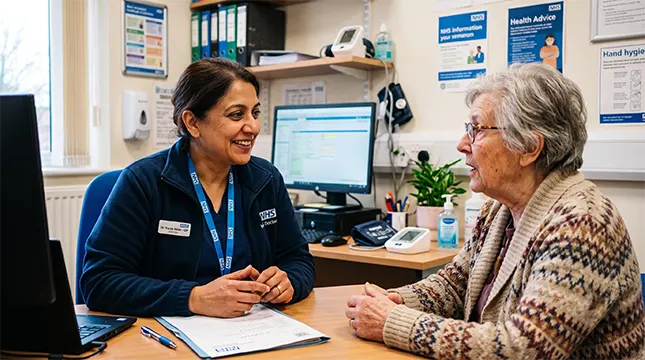
Moray’s hospitals, GP practices and care homes, along with the wider NHS Grampian and NHS Highland areas, continue to welcome international healthcare professionals, and EU nationals make up a meaningful part of that intake.
If you are a nurse, doctor, paramedic, or allied health professional, or moving into adult social care, the Health and Care Worker visa is usually the better route than the general Skilled Worker visa.
It offers a lower salary threshold in many cases, faster processing, reduced application fees, and exemption from the Immigration Health Surcharge that most other visa holders must pay.
Your sponsoring employer, whether an NHS body or a regulated care provider, will issue you a Certificate of Sponsorship confirming your role and salary.
Full details, including eligible occupations and salary rules, are available through the NHS Employers guidance on the Health and Care Visa.
Agriculture, Food Production and Seasonal Work
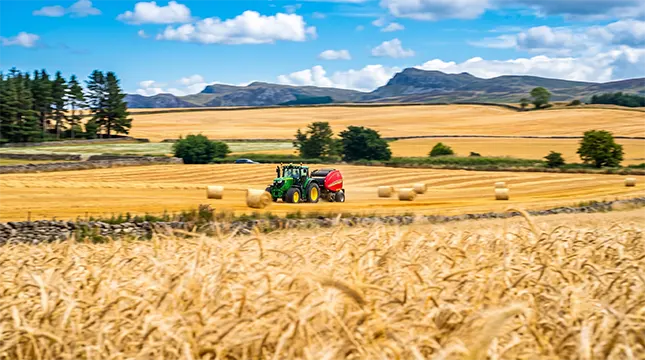
Moray’s farms, soft fruit growers, whisky distilleries, and food processing businesses rely heavily on seasonal labour, and this is another area where EU nationals continue to play a significant role.
For horticulture and food production roles, the Seasonal Worker visa allows you to work in the UK for up to six months within any rolling ten-month period, without the degree level requirement or English language test that applies to the Skilled Worker route.
You must be sponsored by a Home Office licensed scheme operator, rather than the farm or business directly, and pay follows the rates set by the Scottish Agricultural Wages Board.
If you hope to settle in Moray more permanently in food production management, quality control, or a similarly skilled role, this usually falls under the general Skilled Worker visa instead, so check which category your job falls into before applying.
The gov.uk Seasonal Worker visa page sets out full eligibility and the current application process.
The UK Electronic Travel Authorisation and Entry Requirements
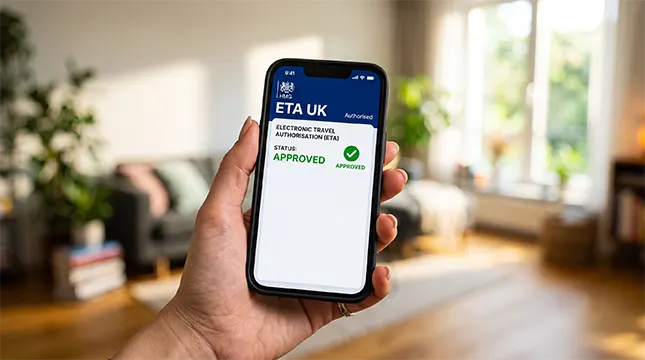
One change that catches many EU travellers by surprise is the UK Electronic Travel Authorisation, or ETA.
Since early 2026, EU, EEA and Swiss nationals travelling to the UK, including for the purpose of moving here, must obtain an ETA before departure unless they already hold a valid UK visa.
The ETA is not a visa in itself. It is a simple pre-travel permission confirming you are cleared to enter, and it must be approved before you board your flight or ferry.
If you already hold a Skilled Worker, Health and Care Worker or Seasonal Worker visa, you will not need a separate ETA, since your visa already covers your entry.
Full guidance is available on the gov.uk Electronic Travel Authorisation page.
Registering for Healthcare and Getting a National Insurance Number

Once you arrive in Moray, two early priorities will make everyday life much easier: registering with a GP and applying for a National Insurance number.
Registering with a local GP practice gives you access to NHS care and is straightforward once you have a Moray address.
The NHS Inform guide to registering with a GP explains the process clearly, and it is worth doing this in your first few weeks rather than waiting until you need an appointment.
A National Insurance number is needed for paying tax correctly and is usually arranged automatically as part of your visa application, though it is worth confirming this with your employer, particularly if you are starting work quickly after arrival.
Bringing Your Belongings, Vehicle and Pets to Moray

Shipping your household belongings from an EU country to Moray now involves a formal customs process, since the UK operates its own independent customs regime.
The good news is that most people qualify for Transfer of Residence relief, known as ToR1, which removes customs duty and import VAT on personal belongings you have already owned and used.
You must apply for a unique reference number through HMRC before your goods are shipped, then pass this to your removal company for the import declaration.
Full details are available on the gov.uk Transfer of Residence guidance. Bringing a car, van or motorbike is generally covered under the same relief, though registration and insurance are separate steps once you arrive.
Bringing pets to Moray is more straightforward than travelling the other way.
Dogs, cats, and ferrets can currently enter Great Britain from the EU with either a valid EU pet passport or an Animal Health Certificate, provided your pet is microchipped, vaccinated against rabies, and dogs have had the required tapeworm treatment shortly before travel.
Here again, the gov.uk guidance on bringing pets to Great Britain from an EU country covers current requirements in full, and it is worth checking close to your travel date, since pet import rules have changed more than once in recent years.
Driving in Scotland on an EU Licence
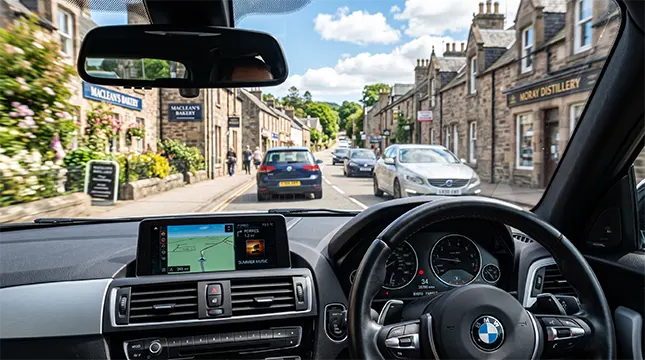
If you hold a valid driving licence issued in an EU or EEA country, you can drive in Scotland on that licence for as long as it remains valid, right up to age seventy. There is no requirement to exchange it immediately.
Many new arrivals choose to exchange their EU licence for a UK one fairly soon after settling in Moray anyway, since a UK licence is widely accepted as proof of identity for everyday tasks like opening a bank account.
The exchange is free for EU and EEA licences and is handled by post through the DVLA.
You can find the current process for exchanging a non-GB driving licence via the Acorn website.
Given how much of daily life in rural Moray depends on having a car, sorting this early is a sensible task on your moving checklist.
Settling into Moray, Housing and Community

Moray offers a genuinely appealing mix for new arrivals: coastal towns like Elgin, Forres and Buckie, a strong sense of community, good schools, and easy access to the wider Highlands.
Housing costs remain notably lower here than in much of Europe’s larger cities, and both rental and purchase markets are active, particularly around the healthcare and food and drink sectors where demand for local staff continues to grow.
It is worth registering with local letting agents or, if buying, an experienced Scottish solicitor early, since the Scottish property process differs from systems used across much of the EU.
Rightmove is the UK’s most popular online property portal; it will provide you with current property and rental costs across the region.
Council registration, setting up utilities and enrolling children in school are all handled through Moray Council, and most new residents find these processes refreshingly straightforward once your visa and address are confirmed.
How Moray Firth Moving & Storage Can Help
Relocating internationally involves enough paperwork without worrying about the physical move itself, and this is where having an experienced removals partner makes a genuine difference.
Moray Firth Moving & Storage has years of experience handling moves into the Highlands, including international relocations from across Europe.
As proud members of the British Association of Removers, the team understands the customs paperwork involved in a European move and can coordinate closely with your ToR1 application and shipping timeline.
Whether you need full shipping overseas services, professional packing support, or secure storage while you finalise your new home, their friendly local team can guide you through every stage of the move.
To discuss your relocation to Moray, visit morayfirthremovers.com or call 01309 580030 for a personalised quote.
Frequently Asked Questions About Moving to the Highlands from Europe
Do I need a visa to move to Scotland from an EU country? Yes. Since Brexit ended free movement, EU nationals need a valid UK visa to live and work in Scotland, such as the Skilled Worker, Health and Care Worker or Seasonal Worker visa, depending on your job.
How far in advance should I start planning an international move? Ideally three to six months ahead, particularly if a visa application is involved. This gives enough time for approvals, shipping arrangements and finding suitable housing before you arrive.
What is the best way to reduce moving costs? Decluttering before you pack is one of the most effective ways to cut costs since removal and shipping prices are often based on volume. Selling or donating items you no longer need before your move date can make a real difference.
Do I need to tell anyone before I move house? Yes. It is worth notifying your bank, employer, GP, and any subscriptions of your new address, and arranging mail redirection with the relevant postal service well before moving day.
What should I pack in an essentials box for moving day? Keep a clearly labelled box with chargers, important documents, medication, toiletries, and a change of clothes. Having these easily to hand makes the first night in a new home far less stressful.
How long does it typically take to feel settled after an international move? Most people find their footing within a few months, once healthcare registration, banking and daily routines are in place. Joining local groups or community events can help this happen more quickly.


